


• Marie Curie Str. 3c, 38268 Lengede
  • +49 (0) 5344 803 99 0

Efficient automation of SMT lines – the underestimated factor: handling

How board handling systems open up the true performance reserve in electronics production

1 Introduction: The silent brake in the high-tech process

In modern electronics production, the processes involved in assembly, reflow
soldering, inspection and testing are highly automated. However, despite state-of-the-art machines,
there are always downtimes, unused line capacity and inefficiencies. The
reason often lies not in the heart of production – but in its nervous system
the board handling.
Board handling systems transport, buffer, rotate and separate printed circuit boards
between process modules. Their efficiency is crucial for a smooth
flow. Nevertheless, this area is often
neglected in investments, planning and optimization. Yet there is potential here to increase the OEE (Overall
Equipment Effectiveness) by up to 15 %.
2 What is board handling?

Board handling includes all systems that mechanically move or manipulate PCBs within the SMT line
. This includes, among other things:

  • Loader / unloader (magazine or stacking principle)
  • Conveyor systems (roller, chain or belt drive)
  • Flipper / turner (for double-sided assembly)
  • Buffer sections / FIFO / LIFO buffer
  • Shuttles and branches
  • Reject stations (for faulty boards)

They typically work with SMEMA interfaces for communication with upstream
and downstream machines. Modern lines increasingly rely on the
Hermes protocol (IPC-HERMES-9852), which enables IP-based communication, board
tracking and automatic product changeovers.

3. the typical weak points

The following handling inefficiencies can be found in many lines:

Problem Consequence

Unsynchronized machine communication

Idle running, blockages, rejects

No buffer management

Total failure when the machine stops

Inaccurate positioning

AOI/SPI error, rework

Frequent manual intervention

Unplanned disruptions, ergonomic stress

Lack of traceability

No traceability, high audit costs

4. why good handling is a game changer

  • An optimized board handling system:
    Synchronizes cycles of different machines
  • Stabilizes the line flow even in the event of partial disruptions
    Reduces set-up times thanks to smart width adjustment and
    quick-change modules
  • Improves ergonomics and reduces manual intervention
  • Enables predictive maintenance through sensor data

5. future: Board handling in Industry 4.0

With the introduction of Hermes, Boardhandling is becoming a digital player:

  • IP communication replaces analog SMEMA connectors
    Board IDs
  • Data transport directly between modules
  • Networking with MES / ERP systems for traceability
  • Edge sensors for maintenance and fault prediction

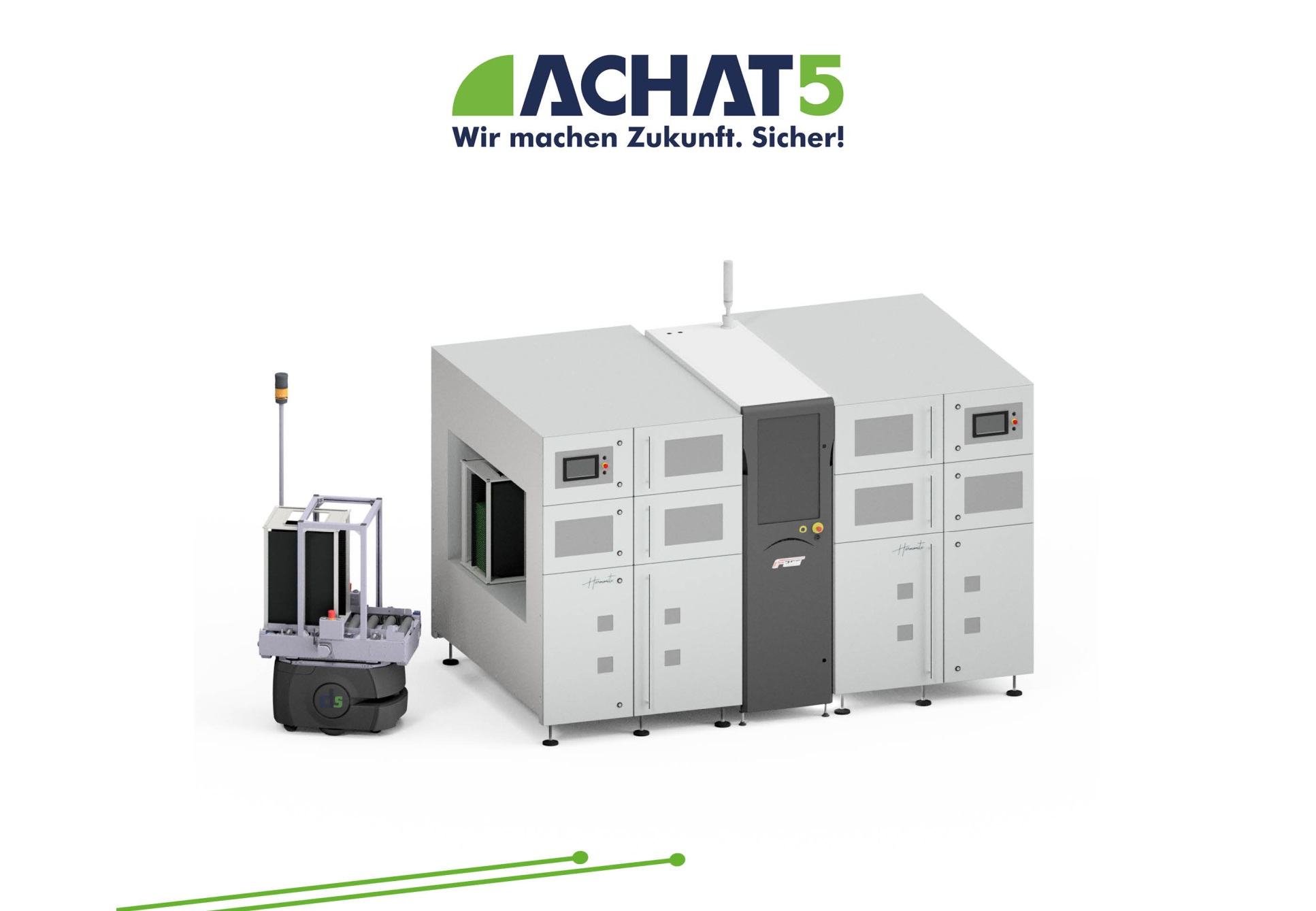
6 Automated guided vehicles (AGVs): automation beyond the line

Another key factor for the future of SMT production is the use of automated guided vehicles (AGVs). These autonomous vehicles transport PCBs, magazines or material containers between lines, storage systems and test stations. Thanks to the Hermes interface, the integration of AGVs into existing lines is standardized and controllable for the first time. This requires an intelligent handling interface that supports magazine changes, loading and unloading and identification of AGV-compatible carriers.

Advantages:

  • Unmanned material flow – particularly relevant when there is a shortage of skilled workers
  • 24/7 operation without downtime thanks to automatic supply
  • Traceability of material movement via board ID and MES connection
  • Flexibility for line conversions and series changes

ROI calculation (example):

Parameter Value

Manual transport time/day

3 hours

Labor costs (incl. NK)

45 €/h

Savings per year

~31.000 €

AGV investment (incl. interface)

approx. 55,000 €

Amortization period

< 2 years

AGVs thus become the enabler of real lights-out production and at the same time ensure operational resilience against a shortage of skilled workers and night shift costs.

7 Conclusion & recommendations

Board handling is not a secondary process, but a strategic adjusting screw for efficiency and sustainability in electronics production. The integration of smart modules, buffer management, Hermes communication and driverless transport systems can increase considerable productivity reserves.

Recommendation for action:

  • Check line for weak points in handling
  • Evaluate Hermes upgrade and buffer elements
  • Analyze application potential for AGVs
  • Planning integration in MES/ERP
  • Consult specialist partners for analysis and implementation

Contact us for a no-obligation initial consultation – we will show you how much power your line has.